Pierre de Wiessant
After Auguste Rodin – Painted Plaster Maquette
Pierre de Wissant After Auguste Rodin (1840–1917)
Patinated plaster cast
France, mid-20th century
18.5" × 6.5" × 6.5"
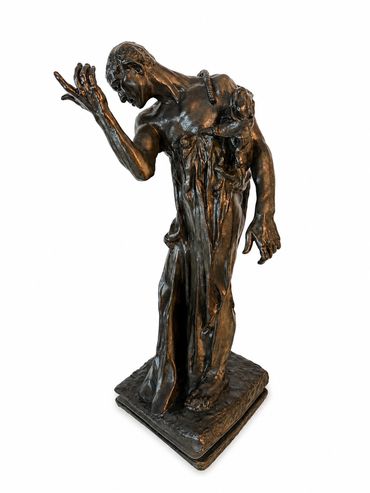
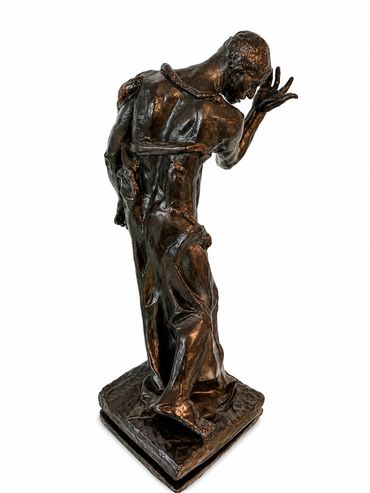
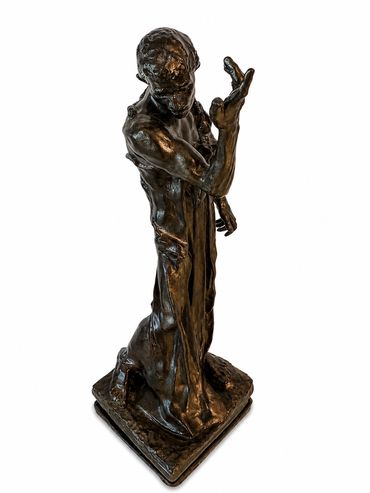
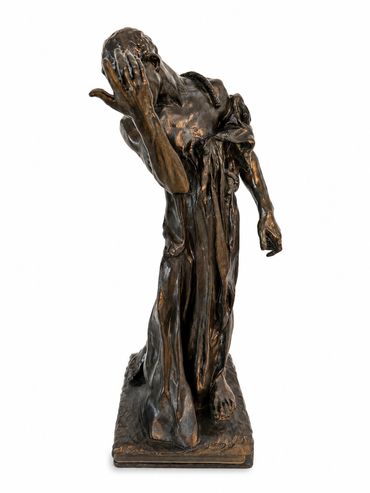
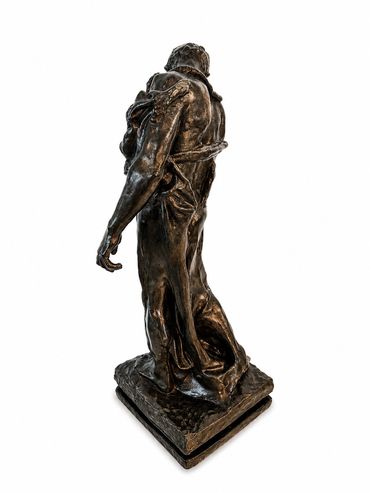
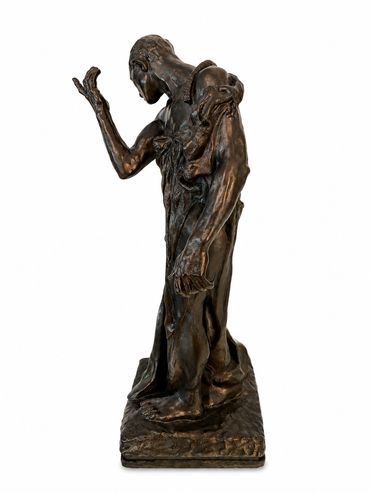
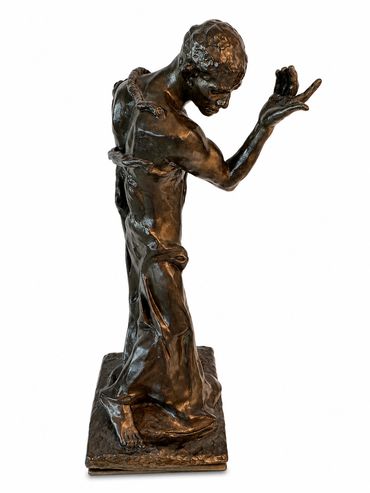
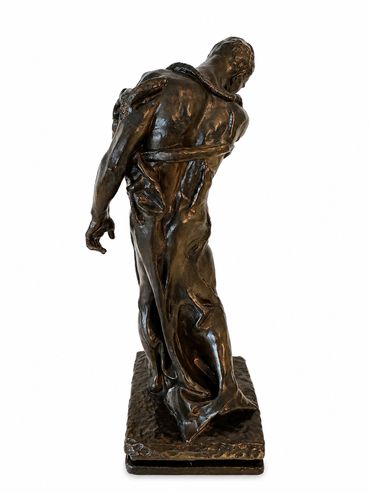
Pierre de Wissant, one of the six figures in Auguste Rodin’s celebrated The Burghers of Calais, is shown in a moment of profound hesitation and resignation. His bowed head, expressive raised hand, twisting posture and deeply modeled drapery convey the psychological intensity that made Rodin’s treatment of the subject revolutionary.
In 1347, during the siege of Calais, six citizens volunteered to surrender themselves to King Edward III in exchange for the lives of their fellow townspeople. Rodin departed from the traditional language of heroic monuments, instead emphasizing the fear, uncertainty, sacrifice, and humanity of the individual figures.
Here, Pierre de Wissant appears consumed by thought, his bowed head and expressive hand conveying hesitation, sacrifice, and resignation. The restless drapery and inward turn of the figure heighten the sense of emotional tension.
The patinated plaster surface catches light and shadow across the modeled form, revealing new relationships between gesture, drapery, and expression from every angle. The result is a deeply expressive interpretation of one of Rodin’s most important figures and a compelling sculptural presence in both classical and contemporary interiors.
Price $2,850
Pierre de Wiessant