
The Archer
Bronze Sculpture
The Archer
Ernst Moritz Geyger (1861-1941)
Bronze Sculpture
1909
42” x 27.5” x 10”
The Archer is Geyger’s most celebrated work. The Gladenbeck foundry acquired the rights to cast reductions in bronze and edited them in three sizes, with one such model appearing on the front of their 1903 catalogue. While Geyger's inspiration ultimately derives from antiquity and more specifically from an ancient torso of a wrestler in Berlin, his particular achievement lies in the fresh and modern reinterpretation of the Ideal, harnessing a stylised male physique in a composition full of the undiluted energy in the split second before the release of the archer’s arrow.
Inventory #1003
Price $28,500

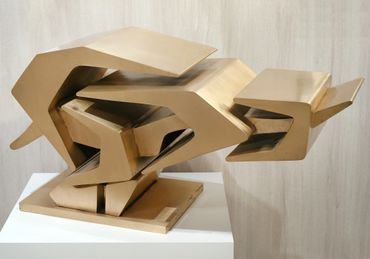
Number 14
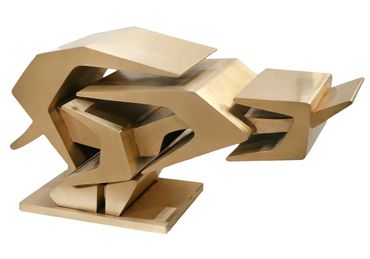
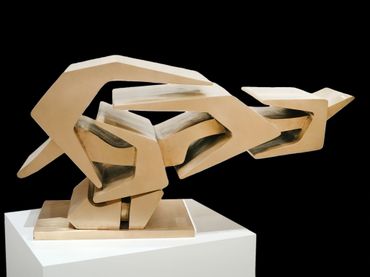
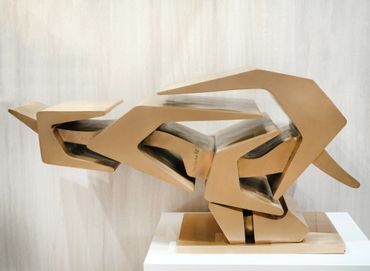
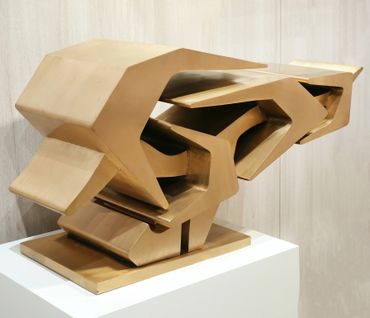
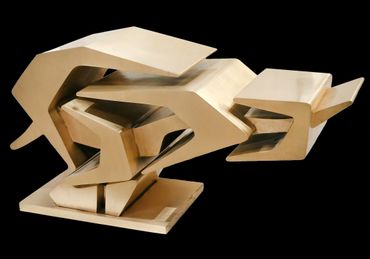
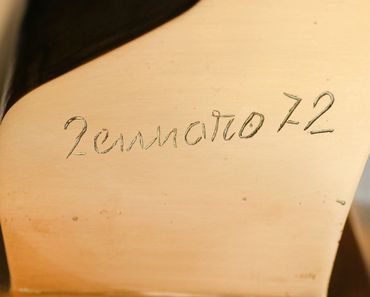
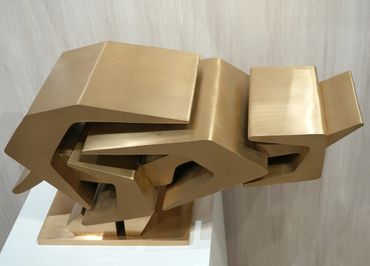
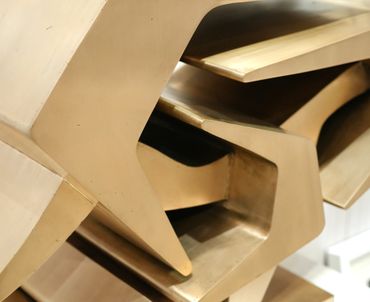
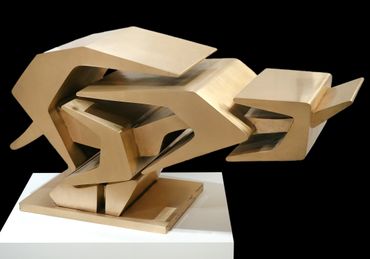
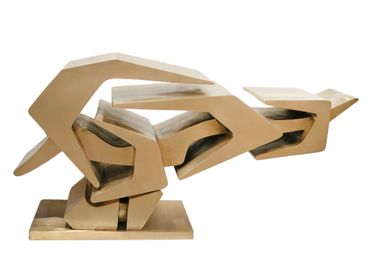
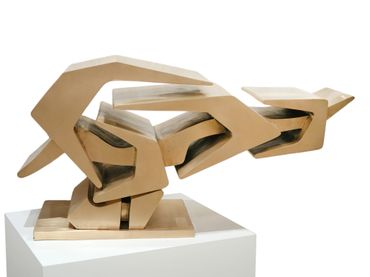
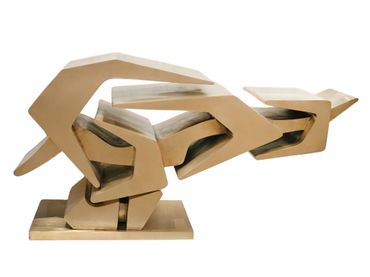
Large Bronze Abstract Sculpture
Number 14
Giorgio Zennaro (1926-2005)
Large Bronze Abstract Sculpture
Pietrasanta, Italy
1972
23.25” x 46” x 18.5”
Giorgio Zennaro’s sculpting career began early with his participation from 1953 to 1965 in all the Group Sculpture Exhibitions of the Bevilacqua La Masa Foundation. In 1955, he won the first prize of the Municipality of Venice.
Number 14 is from a show that he created in 1973…to highlight new forms, both large and small…in bronze, marble and lucite.
Inventory #1004
Price $32,500
Number 14
Seated Mercury
Lifesize Bronze Sculpture
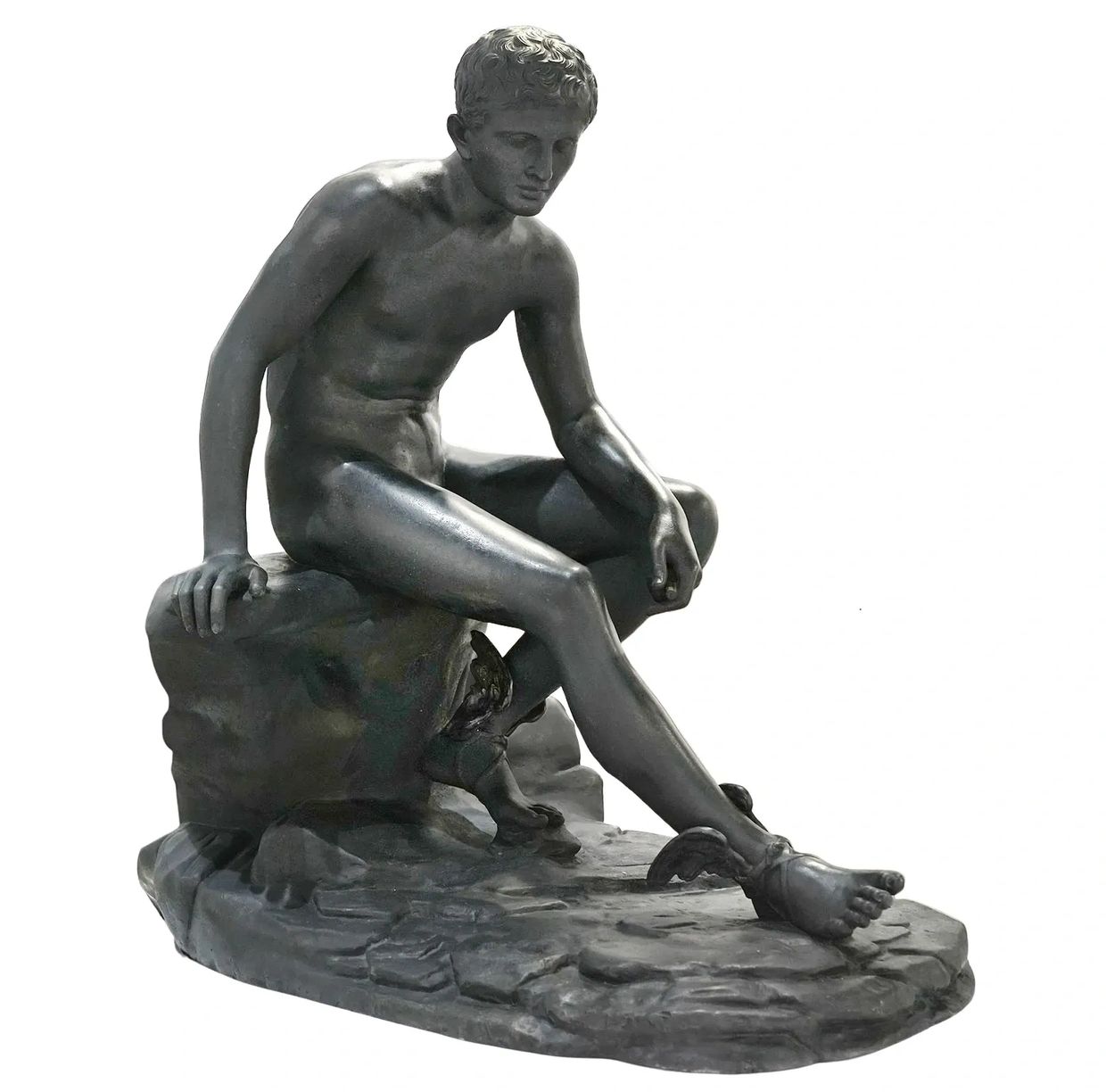
Seated Mercury
Italian School, possibly Naples
Lifesize Bronze Sculpture
Italy
Late 19th Century
48” x 28” x 42”
The Seated Mercury (or Seated Hermes) was discovered on August 3, 1758 during the excavations, in the peristyle garden of the Villa dei Papiri at Herculaneum. It’s one of the most famous works discovered in the ancient sites of Herculaneum and Pompeii in the 18th century, and a must-see for Grand Tour travelers in the 18th and 19th centuries.
Related works:
Getty Villa in Malibu, California
Kunsthistorisches Museum, Vienna
Villa San Michele, Anacapri
Orsteds Park, Copenhagen
Inventory #1002
Price $48,500

Spinario (Boy with Thorn)
Mid-19th Century Bronze Sculpture
Spinario
Benedetto Boschetti, Roma
Bronze Sculpture
Italy
Mid-19th Century
19.75” x 9.25” x 13”
A large-scale and very finely modeled Grand Tour bronze sculpture. The Greco-Roman "Spinario" or the "Boy with Thorn", in the Capitoline Museum of Rome is the original that inspired this sculpture. The beautiful verdigris patina is the natural result of being outside in a garden for several decades.
Boschetti ran an important shop on the via Condotti in Rome from about 1820-1860. He won a medal at the Great Exhibition in London in 1851. Works signed Boschetti rarely come to market.
Signed to the plinth: B. Boschetti - Roma
Inventory #1001
Price $12,500

The Age of Bronze
The Age of Bronze
After Auguste Rodin (1840–1917)
Renaissance Bronze Company, New York
Nelson A. Rockefeller Collection
Number 36 of 150
1979
41 inches tall
A museum-quality bronze after Auguste Rodin's celebrated Age of Bronze, produced in 1979 by the renowned Renaissance Bronze Company of New York as part of the distinguished Nelson A. Rockefeller Collection. Numbered 36 from an edition of only 150 examples, this exceptional cast retains its original richly nuanced black-brown-green patina, a sophisticated surface that beautifully accentuates the extraordinary modeling and anatomical vitality of the figure.
Few sculptures occupy such an important place in the history of art. Created in 1877, The Age of Bronze was Rodin's first major masterpiece and the work that announced the arrival of a revolutionary new sculptor. The figure's astonishing naturalism was so convincing that Rodin was accused of casting directly from a living model rather than sculpting the work by hand. Although the accusation was ultimately disproven, the controversy generated widespread attention and propelled Rodin to international fame. Today, the sculpture is recognized as one of the defining achievements of nineteenth-century sculpture and a landmark in the development of modern art.
The present example captures the remarkable sensitivity and power of Rodin's original conception. Every surface reveals the artist's profound understanding of the human form—from the subtle tension of the torso and limbs to the introspective expression and elegant contrapposto stance. As light moves across the sculpture, the finely modeled musculature creates a dynamic interplay of shadow and highlight, bringing the figure vividly to life.
Produced to the highest standards under the auspices of Nelson Rockefeller, these bronzes were celebrated for their exceptional quality. Rockefeller himself was so proud of the project that each sculpture bears his initials, "NR," signifying its place within this prestigious collection.
The sculpture is presented on its original black laminate pedestal with granite top, creating a striking architectural presentation that elevates the figure and enhances its dramatic presence within an interior.
Elegant, historically important, and instantly recognizable, The Age of Bronze remains famous for a reason—an enduring masterpiece whose beauty, controversy, and artistic significance continue to captivate collectors more than a century after its creation.
Inventory #
Price $60,000

Arrotino (Knife Sharpener)
Lifesize Bronze Bust on Socle
Arrotino (Knife Sharpener)
Fonderia Artistica Chiurazzi
Lifesize Bronze Bust on Socle
Naples, Italy
Mid to Late 19th Century
22” x 10” x 10”
Finest 19th century quality bronze from Naples, this masterpiece by Chiurazzi depicts the knife sharpener. The original marble Arrotino resides in the Tribune at the Uffizi Gallery in Florence.
Arrotino is sharpening his knife, as he is about to flay the satyr Marsyas, who lost a flute competition with the gods. For his hubris, he was strung up and will have his skin removed, according to the myth.
This extraordinary work has a strong presence, as the artist has projected the head forward…which renders a dynamic and energized bust that is rarely found.
Inventory #1011
Price $9,500

The Thinker
Bronze Sculpture
The Thinker
After the iconic model by Auguste Rodin
Nelson Rockefeller Collection
Renaissance Bronze Company, New York
Dated 1979
Edition 15 of 150
Bronze
28 inches high
Approx. 120 lbs.
A compelling and highly refined bronze casting of The Thinker, one of the most celebrated sculptural images in the history of Western art. Originally conceived by Auguste Rodin as part of his monumental Gates of Hell, the figure was later elevated into an independent masterpiece, becoming a universal symbol of intellect, introspection, and the human condition.
This exceptional example originates from the distinguished Nelson Rockefeller Collection and was cast in 1979 by the renowned Renaissance Bronze Company of New York. Numbered 15 from a limited edition of only 150 examples, the sculpture demonstrates remarkable fidelity to Rodin's original conception, capturing the extraordinary tension between physical power and psychological depth that has made The Thinker an enduring icon for more than a century.
The figure's muscular anatomy is rendered with exceptional sensitivity and precision. Every surface—from the taut forearms and powerful shoulders to the compressed torso and expressive hands—reveals Rodin's revolutionary ability to animate bronze with emotional intensity. The contemplative pose conveys a moment of profound concentration, creating a sculpture that is both visually commanding and deeply human.
Isolated from the larger narrative of The Gates of Hell, The Thinker emerges as a singular work of art, allowing viewers to focus entirely on its extraordinary formal qualities and universal symbolism. From every angle, the sculpture offers a dynamic interplay of light, shadow, mass, and movement, creating a powerful focal point within an interior.
Recently professionally cleaned and rewaxed, the bronze presents beautifully with a rich, nuanced dark patina that accentuates the sculptural modeling and highlights the exceptional quality of the casting. The work possesses a museum-quality presence and an unmistakable sense of gravitas.
Sophisticated yet timeless, this sculpture integrates effortlessly into classical, traditional, transitional, and contemporary interiors alike. Whether displayed in a library, study, gallery setting, or modern living space, it commands attention while inviting reflection.
An exceptional Nelson Rockefeller Collection bronze of one of the most influential sculptures ever conceived—a work of enduring beauty, intellectual power, and extraordinary visual impact.
Price $60,000

Drunken Satyr
Bronze Sculpture
Drunken Satyr
Fonderia Giorgio Sommer
Naples, Italy
Fourth Quarter of the 19th century
Important Fonderia Giorgio Sommer Bronze of a Drunken Satyr Reclining on a Wineskin, After the Roman Original from Herculaneum, 25 in. Wide
Description:
A masterful and highly evocative bronze by the esteemed Fonderia Giorgio Sommer, Naples, after the celebrated Roman sculpture of a Drunken Satyr, originally unearthed in the excavations of the Villa dei Papiri, Herculaneum, and now preserved in the Naples National Archaeological Museum.
This composition captures a moment of pure Bacchic abandon—an expressive satyr reclines languidly upon a wineskin, his body extended in sensuous ease, one arm lifted skyward in a gesture of intoxicated reverie. The figure’s animated expression, tousled hair adorned with vine leaves, and fluid, unguarded pose embody the mythological spirit of indulgence, pleasure, and the primal forces of nature associated with the retinue of Dionysus.
Bronzes attributed to the Giorgio Sommer foundry are highly regarded for their refined casting and their close relationship to the Grand Tour tradition of Naples, where discerning collectors sought faithful and sophisticated reductions of the most important antiquities. This example demonstrates exceptional quality: beautifully modeled anatomy, crisp chasing throughout, and a rich, deep patina that enhances the sculptural depth and movement of the composition.
The scale—a generous 25 inches wide—gives the work commanding presence, making it an ideal focal point within both contemporary and classical interiors. The interplay of line, gesture, and mass creates a dynamic silhouette from every angle, reinforcing its status as both a decorative object and a work of enduring artistic significance.
A rare and compelling example of classical sculpture, this bronze offers the opportunity to live with a timeless image of the ancient world—imbued with movement, sensuality, and narrative vitality.
Details:
- Origin: Naples, Italy
- Foundry: Fonderia Giorgio Sommer
- Subject: Drunken Satyr Reclining on a Wineskin
- After: Roman original, Villa dei Papiri, Herculaneum
- Current Location of Original: Naples National Archaeological Museum
- Date: 19th / early 20th century
- Material: Bronze
- Width: 25 inches (approx. 63.5 cm)
- Condition: Excellent vintage condition with a beautifully developed patina; minor wear consistent with age
Inventory 1055
Price $15,000

Neapolitan Fisherman
Bronze Sculpture
Neapolitan Fisherman
Fonderia Giorgio Sommer
Bronze Sculpture
Italy, Naples
Third Quarter of the 19th Century
20.5” x 13” x 12”
The Grand Tour Bronze cast as a Neapolitan Fisherman after the original excavated in 1823 at Pompeii in the Casa della Fontana piccola (House of the small fountain). The finely cast Sculpture is seated upon a rocky outcrop with a Bacchus mask fountain spout beneath him. The figure barefooted wearing a loose-fitting tunic and straw hat leans forward with his hands poised. The Grand Tour Bronze dates to the late 19th century, circa 1875, and is signed around the Bacchus fountain mask G. Sommer Napoli.
Inventory #1013
Price $6,500

Robert Mitchell -Abstract Bronze Sculpture
Robert Mitchell (English, 20th Century)
Abstract Bronze Sculpture on Green Marble Base
Signed with Studio Seal on the Underside
1970s
18 in. H x 22 in. W x 12 in. D
A commanding and highly sculptural abstract bronze by English artist Robert Mitchell, masterfully conceived as an endless loop of movement and energy. Created during the 1970s, a period that celebrated bold experimentation in form and material, the work embodies the era's fascination with motion, technology, and sculptural innovation. Cast in a substantial gauge bronze and polished to a luminous finish, the sculpture presents a dynamic interplay of convex and concave surfaces that continually transform as light moves across its form.
Sweeping curves, pointed terminals, and muscular passages of bronze create a powerful sense of perpetual movement. The composition balances weight and fluidity with remarkable confidence, producing an ever-changing dialogue between positive and negative space. Its reflective surface captures and refracts the surrounding environment, giving the sculpture a dynamic presence that appears almost alive.
The influence of aviation and engineering is particularly compelling. Robert Mitchell was the son of Reginald Joseph Mitchell, the legendary English aeronautical engineer responsible for the Supermarine Spitfire, widely regarded as one of the most iconic aircraft designs in aviation history. While Robert Mitchell devoted himself to sculpture, the connection is difficult to overlook. The flowing contours, aerodynamic forms, and sensation of controlled energy suggest a sculptural interpretation of speed, lift, and motion translated into bronze.
Viewed from every angle, the work reveals new relationships between form and space, encouraging the eye to travel continuously through its looping composition. The result is a sculpture that is both intellectually engaging and visually captivating.
The bronze is mounted on a beautifully veined green marble cube base whose substantial weight provides a striking counterpoint to the fluidity of the sculpture above. Together, bronze and marble create a harmonious balance between movement and permanence, engineering and artistry.
Signed with the artist's studio seal on the underside, this impressive work exemplifies the sophisticated modernist sculpture of the 1970s—bold, elegant, and unmistakably architectural in its presence.
Inventory #

Dancing Faun
Bronze Sculpture
Bronze of the Dancing Faun
Fonderia Chiurazzi
Bronze Sculpture
Italy, Naples
After the Antique Pompeii Original
32"
A superb and highly expressive bronze reduction of the celebrated Dancing Faun, cast by the renowned Fonderia Chiurazzi of Naples, Italy—arguably the most esteemed 19th–20th century foundry for Grand Tour bronzes after the antique. This example captures, with exceptional fidelity and vitality, the famed ancient Roman sculpture discovered fully intact in the House of the Faun in Pompeii.
The figure is rendered in a moment of ecstatic motion—arms raised, torso twisting, weight shifting dynamically through the hips and legs—imbuing the work with a sense of rhythm and abandon that feels remarkably modern. The anatomy is beautifully modeled, muscular yet refined, with the Chiurazzi workshop’s hallmark attention to surface nuance: softly burnished planes contrast with crisp detailing in the hair, beard, and expressive hands. The dark, rich patina enhances the sculpture’s sculptural depth, catching light across the contours in a way that emphasizes both movement and form.
Satyrs and fauns—mythological companions of Bacchus—embody the duality of nature: instinct and beauty, wildness and grace. Here, that spirit is distilled into an object of both scholarly importance and decorative power. The composition reads effortlessly from every angle, making it ideal for placement in the round, whether on a pedestal, console, or as a focal point within a curated interior.
The Chiurazzi foundry was revered for its unparalleled ability to translate ancient marbles into bronze with extraordinary precision, often working from direct casts taken in Italian museums. Their works are held in major American institutions, including the Getty Villa and the John and Mabel Ringling Museum of Art, underscoring the historical and artistic significance of their production.
A museum-quality example—rare at this scale—offering both connoisseurship and presence.
Details
- Origin: Naples, Italy
- Foundry: Fonderia Chiurazzi
- Medium: Bronze
- Height: 32 inches
- Date: Late 19th / early 20th century
- Condition: Excellent, with a beautifully preserved patina; ready to place
Provenance
After the antique Roman original excavated at Pompeii, 1st century BCE/CE.
Literature / Notes
The original Dancing Faun remains one of the most iconic survivals of Roman sculpture, celebrated for its animation and naturalism—qualities faithfully and elegantly captured in this exceptional Chiurazzi casting.
Inventory 1053
Price $15,000

Herculaneum Runner
Bronze Sculpture
Bronze of a Young Athlete
Fonderia Chiurazzi
After the Roman Runner (L’Atleta),
Naples, Italy,
21 in.
Description:
A superb bronze reduction by the esteemed Fonderia Chiurazzi, Naples, faithfully after the celebrated Roman marble of a young athlete (runner) discovered in the Villa dei Papiri, Herculaneum, and now preserved in the Naples National Archaeological Museum. This sculpture captures a fleeting moment of poised motion—an athlete leaning forward in anticipation, embodying both physical readiness and psychological focus.
Renowned for their museum-level casts, Chiurazzi bronzes are revered for their exceptional fidelity to antiquity. This example demonstrates the foundry’s hallmark precision: finely chased surface, nuanced modeling, and a rich, dark patina that accentuates the figure’s sinuous musculature and anatomically exact form. The expressive head, softly parted lips, and intent gaze lend the work a deeply human presence—bridging ancient idealism with lifelike immediacy.
The composition is both dynamic and balanced, with subtle contrapposto and forward momentum creating a compelling sculptural silhouette from every angle. Mounted on its original rectangular base bearing the Chiurazzi foundry seal, this piece possesses both authenticity and gravitas.
A work of enduring classical beauty, this bronze serves as a striking focal point—equally at home in a refined modern interior or within a more traditional, collector-driven setting. It is a timeless dialogue between antiquity and contemporary living.
Details:
- Origin: Naples, Italy
- Foundry: Fonderia Chiurazzi
- Subject: Young Athlete / Runner (L’Atleta)
- After: Roman original, Villa dei Papiri, Herculaneum
- Date: 20th Century
- Material: Bronze
- Height: 21 inches (approx. 53 cm)
- Base: Original bronze base with Chiurazzi stamp
- Condition: Excellent vintage condition; beautifully preserved patina with minor wear consistent with age
Inventory 1054
Price $9,500

The Ram
Bronze Sculpture
The Ram
Grand Tour Bronze with Traces of Original Gilding on Siena Marble Socle
Italy, Mid-19th Century
A charming and highly evocative Grand Tour bronze depicting a ram's head, masterfully modeled and retaining traces of its original gilding. Executed in Italy during the mid-19th century, the work reflects the enduring fascination with the imagery of the ancient Mediterranean world that captivated travelers, collectors, and connoisseurs throughout the Grand Tour era.
The sculptor has captured the animal with remarkable sensitivity, balancing naturalistic observation with the idealized restraint associated with classical art. The elegantly curled horns frame a serene and noble expression, while subtle modeling throughout the muzzle and fleece lends the work a sculptural vitality far beyond its intimate scale. Time has softened the surface beautifully, revealing scattered remnants of gilding that enrich the dark patina and speak to the object's long history.
Mounted on a finely carved Siena yellow marble socle, whose warm golden tones harmonize beautifully with the surviving gilded highlights, the sculpture possesses both visual richness and architectural presence. The contrast between the textured bronze and luminous marble creates a sophisticated decorative object equally suited to a desk, library, cabinet, or curated collection of classical works.
Animal subjects held deep symbolic significance in the ancient world, and the ram in particular was associated with strength, sacrifice, fertility, and divine protection. Such themes resonated strongly with 19th-century collectors who sought tangible connections to the civilizations of Greece and Rome.
Elegant, sculptural, and rich in historical character, this finely executed Grand Tour bronze embodies the romance of antiquity in a highly collectible cabinet-scale form.
Dimensions: 7.5 inches high
Price $2,850

Peplophoros
Polished Bronze Sculpture
Italian School
Polished Bronze Sculpture
Italy
Late 19th or Early 20th Century
14.25” x 5” x 5”
Called a peplophoros, this small sculpture is inspired by Greek originals of about 470 B.C. It portrays a woman wearing a peplos, a garment that was pinned at the shoulders and belted at the waist, creating straight, heavy folds to the feet. Her raised arms imply that she may be dancing. The cobra at her feet adds interest and intrigue, possibly from a lost ceremony.
Inventory #1015
Price: $1,850
Homer
Bronze Sculpture
Homer
Italian School, Probably Naples
Grand Tour Bronze on Siena Yellow Marble Socle
Late 19th Century
18 inches high
A distinguished Grand Tour bronze depicting Homer, the legendary poet of antiquity and author of the Iliad and the Odyssey. Rendered with exceptional fidelity to classical prototypes, this late nineteenth-century Italian casting captures the enduring image of the blind poet-philosopher with remarkable sensitivity and sculptural presence.
The work is beautifully modeled throughout, displaying crisp, finely articulated details in the flowing beard, deeply furrowed brow, and richly textured hair. The contemplative downward gaze lends the bust a sense of wisdom and introspection, while the powerful treatment of the drapery creates a commanding silhouette from every angle. Particularly noteworthy is the quality of the casting, which preserves the complexity of the original model with impressive sharpness and depth.
The bronze retains a rich, dark patina that accentuates the sculptural modeling and creates a dramatic interplay of light across the surface. Mounted on an elegant turned Siena yellow marble socle, the warm golden tones of the stone provide a striking contrast to the dark bronze, enhancing its visual impact and elevating its architectural presence.
Likely produced in Naples during the height of the Grand Tour era, this bust reflects the enduring fascination with the intellectual and artistic achievements of the ancient world. Works of this quality were acquired by discerning travelers as symbols of culture, education, and refinement, bringing the spirit of classical antiquity into the home.
With its impressive scale, museum-quality execution, and timeless subject matter, this Homer bust serves as a compelling focal point for a library, study, gallery, or sophisticated interior.
Inventory #Homer
Price $3,850

Venus
Venus Removing Her Sandals
Fonderia Giorgio Sommer, Napoli
Late 19th Century
Patinated Bronze
7 inches high
A charming and highly collectible bronze reduction depicting Venus Removing Her Sandals, produced by the venerable Fonderia Giorgio Sommer of Naples in the late nineteenth century. Inscribed “Giorgio Sommer, Napoli” to the integral base, this sculpture embodies the refined craftsmanship and classical sensibility that made Sommer one of the most respected names in Grand Tour bronzes.
Capturing a fleeting and intimate moment, Venus pauses gracefully as she bends to remove her sandal. The composition is remarkable for its balance and elegance, transforming an everyday gesture into an image of timeless beauty. The subtle contrapposto stance, delicately lowered gaze, and fluid contours of the figure create a sense of quiet movement and naturalism that recalls the finest sculptures of antiquity.
Though modest in scale, the work displays exceptional attention to detail. The figure is beautifully modeled, with crisp definition throughout the hair, anatomy, and drapery-inspired forms. Particularly attractive is the richly decorated flared base, adorned with finely cast palmette ornament derived from classical architectural motifs. The deep, nuanced patina further enhances the sculptural quality of the piece and speaks to the high standards associated with the Sommer foundry.
Founded by the celebrated photographer, publisher, and entrepreneur Giorgio Sommer, the Naples workshop became renowned for producing museum-quality reductions of the most admired sculptures discovered at Pompeii and Herculaneum, allowing Grand Tour travelers to bring the beauty of the ancient world into their homes.
Elegant, scholarly, and richly evocative of the classical tradition, this rare desktop bronze possesses a presence far beyond its size and serves as a sophisticated accent for a library, desk, vitrine, or curated collection of Grand Tour objects.
Inventory #Venus
Price $1,450
Modernist Bust
Modernist Polished Bronze Bust
Charles Delporte (1928-2012)
Polished bronze bust, Signed and Numbered 34/100.
France
Mid-20th Century
13” x 5” x 5”
This modernist bust takes on an abstract form, as it resembles a mask. The work is influenced by the Symbolist movement, notably in its organic form and poetic expressiveness. The fluid style also evokes a certain kinship with the classical idealization of the female face.
Charles Delporte was a Belgian multidisciplinary artist, known for his painting, sculpture and writings. He developed a humanist art, imbued with spirituality and science, aiming to connect man with the universe. His work, marked by great sensitivity, seeks to transcend reality through beauty and symbolic reflection. Numbered 34/100.
Inventory #1010