Herculaneum Runner — Fonderia Chiurazzi
Fonderia Chiurazzi Grand Tour Bronze
Herculaneum Runner
Fonderia Chiurazzi
Grand Tour Bronze Sculpture
Naples, Italy
20th Century
21" H
This finely cast bronze depicts the Herculaneum Runner, a youthful athlete derived from one of the celebrated ancient bronze figures associated with the Villa dei Papiri at Herculaneum.
Produced by the historic Fonderia Chiurazzi of Naples, the sculpture reflects the foundry’s longstanding tradition of creating high-quality bronze reproductions after important works of classical antiquity. The figure’s forward-leaning pose, concentrated expression and athletic anatomy convey a strong sense of restrained movement and physical energy.
Mounted on its original rectangular bronze base, the work combines archaeological subject matter with the refined casting and dark patinated surface characteristic of the Grand Tour bronze tradition.
Marks & Documentation:
The original bronze base bears a circular Fonderia Chiurazzi foundry seal, clearly inscribed:“CHIURAZZI / NAPLES” with the foundry emblem at its center. The surviving foundry mark provides direct physical documentation connecting this particular bronze to the historic Chiurazzi foundry in Naples and should be considered an important identifying feature of the work.
Historical Catalog Documentation:
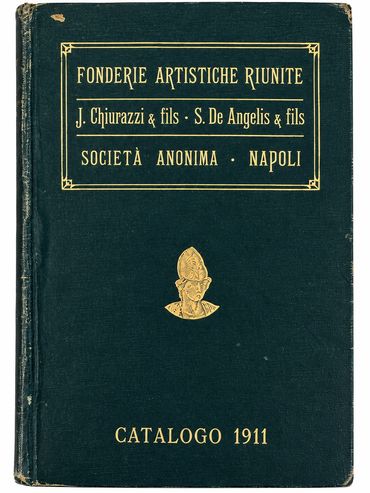
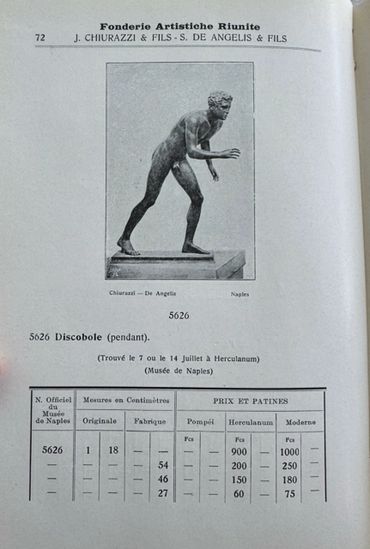
The Herculaneum Runner is illustrated in the original 1911 catalog of Fonderie Artistiche Riunite, J. Chiurazzi & Fils – S. De Angelis & Fils, Naples. Appearing on page 72 as catalog number 5626, under the historical designation Discobole (pendant), the sculpture is directly documented within the foundry's repertoire of classical bronze reproductions.
The catalog identifies the ancient original as having been discovered at Herculaneum on July 14, 1754, and records its association with the Naples Museum. This archival reference, together with the CHIURAZZI NAPLES foundry seal on Maison Palm Beach's bronze, provides valuable historical context for the work's attribution and its place within the Grand Tour tradition of Neapolitan bronze casting.
Archival Reference: Fonderie Artistiche Riunite, Naples, 1911, p. 72, catalog no. 5626, Discobole (pendant).
Historical Context:
The ancient bronze runners discovered at Herculaneum became important models for later Grand Tour sculpture. Their combination of idealized classical anatomy and a striking sense of movement made them particularly appealing to collectors and to the European foundries that reproduced ancient masterpieces for museums and private collections.
Fonderia Chiurazzi became especially associated with this tradition, producing bronzes after works from the archaeological collections of Naples and the ancient sites of Pompeii and Herculaneum.
Details:
- Origin: Naples, Italy
- Foundry: Fonderia Chiurazzi
- Subject: Young Athlete / Runner (L’Atleta)
- After: Roman original, Villa dei Papiri, Herculaneum
- Date: 20th Century
- Material: Bronze
- Height: 21 inches (approx. 53 cm)
- Base: Original bronze base with Chiurazzi stamp
- Condition: Excellent vintage condition; beautifully preserved patina with minor wear consistent with age
Price $9,500