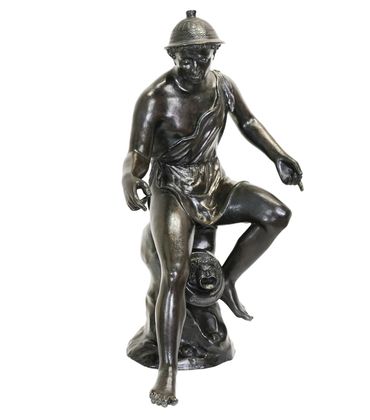
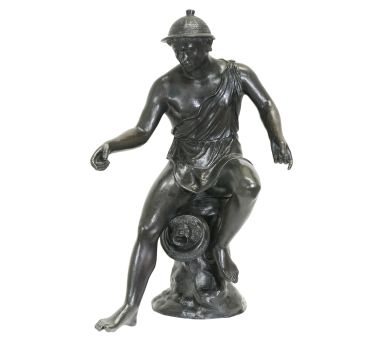
Neapolitan Fisherman — Giorgio Sommer Grand Tour Bronze
19th-Century Italian Grand Tour Bronze — Giorgio Sommer
Neapolitan Fisherman (Pompeian Fisherman)
Fonderia Giorgio Sommer, Naples, Italy
Bronze sculpture after the antique
Third quarter of the 19th century, circa 1875
20.5 × 13 × 12 inches
A Grand Tour Bronze from the Giorgio Sommer Foundry
This finely cast 19th-century Italian Grand Tour bronze of the Neapolitan Fisherman was produced by the celebrated workshop of Giorgio Sommer in Naples, circa 1875. Inspired by an ancient Roman fountain sculpture excavated at Pompeii, the work reflects the archaeological fascination and refined bronze-casting traditions that distinguished the Grand Tour era.
The composition reproduces a bronze fisherman discovered at the House of the Small Fountain (Casa della Fontana Piccola) in Pompeii during excavations begun in 1823. The ancient original, now preserved in the National Archaeological Museum in Naples (Inventory No. 4994), was originally part of an elaborate Roman garden fountain.
Historically, the figure was sometimes identified as Mercury or Hermes in the guise of a fisherman, although it is more generally understood today as a Roman fisherman.
Sculpture and Classical Inspiration
The youthful figure sits upon a rocky outcrop, wearing a short tunic and distinctive brimmed hat. Its relaxed posture, carefully modeled anatomy, expressive face, and finely rendered drapery demonstrate the sculptural qualities that made Pompeian subjects popular among 19th-century European collectors.
Beneath the seated figure is a Bacchic mask fountain spout, recalling the ancient sculpture's original function as a decorative water feature. This detail adds historical interest and visual complexity to the bronze.
The sculpture's rich patina, detailed casting, and carefully articulated surfaces exemplify the appeal of Italian Grand Tour bronzes produced for sophisticated private collections.
Giorgio Sommer and the Grand Tour Tradition
Giorgio Sommer (1834–1914), celebrated for his documentation of Pompeii, Naples, and southern Italy, also operated a workshop associated with the production of bronze reproductions after classical antiquity.
His foundry's work helped introduce the artistic achievements of Pompeii and Herculaneum to an international audience of collectors and Grand Tour travelers.
Bronzes associated with Sommer remain important examples of the 19th-century fascination with archaeology, historical collecting, and the rediscovery of classical art.
Marks and Documentation
The bronze bears a Sommer foundry inscription, providing an important identifying feature connecting the work to the Naples workshop.
The presence of this mark, together with the sculpture's historical subject, composition, and casting characteristics, supports its identification as a Giorgio Sommer Grand Tour bronze.
Historical and Museum Reference
The ancient prototype is preserved in the National Archaeological Museum, Naples, Inventory No. 4994.
The Fitzwilliam Museum, Cambridge, documents a related bronze reproduction under Pompeii Fisherman Seated (M.20-1951), providing useful comparative evidence for the composition and its popularity among collectors of classical sculpture.
Collecting and Display
With its rich patina, classical subject, and documented foundry association, this Neapolitan Fisherman offers a compelling example of Italian Grand Tour sculpture. Its manageable scale makes it particularly well suited for display in a library, study, gallery, or sophisticated residential interior.
Available through Maison Palm Beach, serving private collectors, interior designers, architects, and art advisors throughout the United States.
Private viewings and additional photography are available by appointment.
Related Collections: Grand Tour Sculpture | Bronze Sculpture
Price: $6,500
Neapolitan Fisherman — Sculpture Details & Foundry Signature