The Classical Ideal & the Academic Figure
The Age of Bronze
Contemplation of Form
Contemplation of Form

An expressive study of the male figure, this bronze after Auguste Rodin’s The Age of Bronze combines naturalistic anatomy with a quietly contemplative stance. Produced in 1979 by Renaissance Bronze Company, New York, for the Nelson A. Rockefeller Collection, this example is numbered 36 of 150 and stands 41 inches high. Its nuanced dark patina emphasizes the modeling and sculptural presence of the standing nude.
Contemplation of Form
Contemplation of Form
Contemplation of Form
Philip Melville Courtney’s Contemplation of Form (2025) is an American oil on canvas measuring 22 × 16 × 2 in.
The restrained grisaille palette gives the figure an almost sculptural presence, while the forward-leaning pose emphasizes the curved back, musculature and weight of the body. The lowered head and relaxed hand temper that physical strength with a quieter, contemplative mood.
Herculaneum Runner
Herculaneum Runner
Herculaneum Runner
A Grand Tour bronze after the ancient Herculaneum Runner, capturing a male athlete leaning forward in readiness for motion. The low stance and extended arms emphasize anatomy, balance, and energy, bringing an athletic expression of the classical male form into an interior.
The Archer
Herculaneum Runner
Herculaneum Runner
A bronze after Ernst Moritz Geyger’s The Archer, depicting a male figure drawing his bow. The extended arms and poised stance express strength, balance, and controlled movement—a dynamic interpretation of the athletic male form.
Previously sold by Maison Palm Beach through 1stDibs.
Studies of Anatomy & Form
Gesture 1
Athlete, Male —Nude Robert Tait McKenzie (1867–1938)

A tonal study of a seated male nude viewed from behind, exploring the relationship between gesture and anatomy. Light and shadow define the shoulders, back, and turning torso, giving the figure a sculptural presence and a quiet sense of movement.
Athlete, Male —Nude Robert Tait McKenzie (1867–1938)
Athlete, Male —Nude Robert Tait McKenzie (1867–1938)

A signed original plaster maquette by Canadian sculptor, physician and educator Robert Tait McKenzie. Celebrating the athletic male nude, the figure combines precise anatomical observation with classical ideals of strength, balance and proportion.
The work reflects McKenzie's distinctive approach to sculpture, informed by his lifelong study of the human body and physical movement. Its intimate scale makes it equally compelling as an academic study and a sculptural accent in contemporary or classical interiors.
17.5 × 6 × 6 in.
Gaddi Torso

A painted study of the Gaddi Torso, translating the classical male fragment into a work for the wall.
Warm tones and carefully modeled shadows emphasize the abdomen and twisting chest, connecting the study of the male figure with the enduring influence of antique sculpture.
Niclas — Refael Salem
Refael Salem’s Niclas (2022) presents a male figure viewed from behind, his concealed face inviting reflection on identity and intimacy. The quiet pose and warm palette offer a contemplative counterpoint to the collection’s classical figures, reflecting Salem’s interest in looking as a way of understanding ourselves.
Oil on canvas, 22.5 × 30 cm.
Blockhead 1
Blockhead 1
Nick Gentry (b. 1980), British
2024 · Oil and acrylic on linen
In Blockhead 1, Nick Gentry reduces the human profile to a striking grid of geometric forms, interrupted by fragments of realistically rendered skin.
The tension between abstraction and representation creates a contemporary meditation on identity, anonymity, and the human face in the digital age.
Part of Gentry’s Blockhead body of work, the portrait reflects his broader interest in how technology reshapes self-perception and personal identity.
The pixel-like structure suggests both digital fragmentation and concealment, transforming the figure into a powerful contemporary exploration of the male form through image, data, and abstraction.
40 × 28 in.
Mythology, Heroism & the Classical Male
Dying Slave
Neptune and Triton
Neptune and Triton
A monumental plaster cast after Michelangelo’s Dying Slave, expressing the male form through a gently turning torso, elongated limbs, and a raised arm framing the head. The contrast between physical strength and a yielding pose gives the figure a contemplative presence, uniting anatomical beauty with emotional expression.
Monumental 90 in. high (7 ft. 6 in.).
Neptune and Triton
Neptune and Triton
Neptune and Triton
Philip Melville Courtney’s Neptune and Triton explores the male form through a dramatic monochrome composition. Neptune’s muscular, twisting torso, flowing drapery, and diagonal trident rise above Triton and sea creatures, giving the painted figures a sculptural presence.
Placeless Place
Wounded Achilles
Wounded Achilles
Ben Sack
2024 · Pen and ink on Fabriano paper
In Placeless Place, Ben Sack transforms the male figure into an imagined architectural world, constructing the body from an extraordinary accumulation of buildings, streets, passages, and intricately drawn urban forms. The monumental seated figure emerges from—and appears almost inseparable from—the fantastical cityscape surrounding him.
Drawing on Sack’s fascination with architecture, cartography, scale, and infinity, the work moves between figuration and abstraction: the male body becomes both landscape and metropolis. An intricate contemporary exploration of the male form, Placeless Place rewards close viewing as its dense network of miniature architectural details gradually reveals the larger human figure.
12 × 9 in.
Signed, dated and titled on reverse
Wounded Achilles
Wounded Achilles
Wounded Achilles
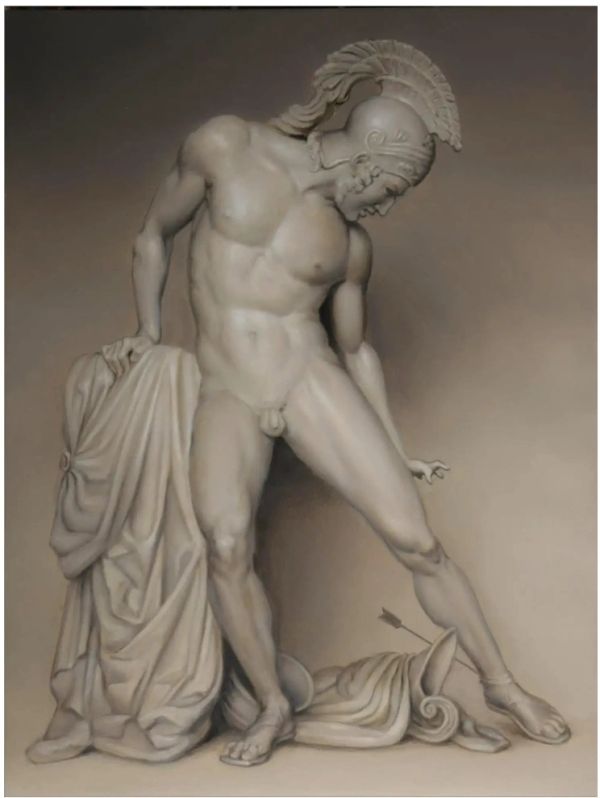
Philip Melville Courtney (b. 1962), American
2025 · Oil on canvas
A contemporary interpretation of the classical male nude, inspired by Innocenzo Fraccaroli’s celebrated Wounded Achilles.
Painted largely en grisaille, Courtney transforms the heroic ideal into an image of strength, vulnerability, and endurance, bridging classical sculpture, Neoclassicism, and contemporary figurative painting.
25 × 18 × 2 in.
The Male Figure in Modern Art
Arcadia at Dusk
Athletes at the Olympics
Athletes at the Olympics
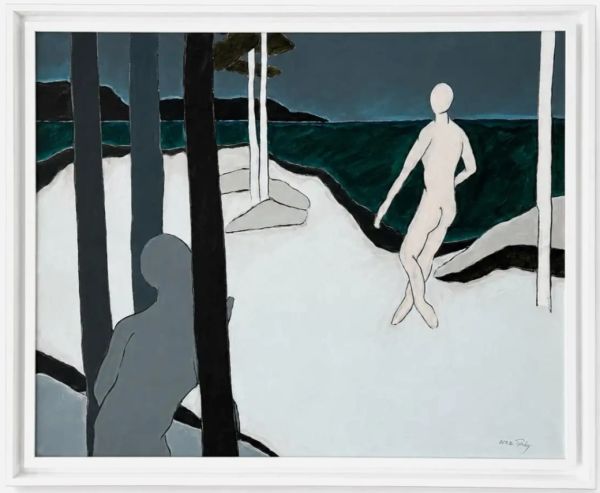
Harley Francis (1940–2017), American
1980 · Oil on canvas
A striking late twentieth-century American Modernist painting, Arcadia at Dusk presents two stylized male figures within a dreamlike coastal landscape. Francis reduces figure, shoreline, water, trees, and distant mountains to elegant geometric forms, balancing abstraction with a quiet sense of narrative.
Rendered in deep teal, charcoal, slate gray, and ivory, the composition contrasts a shadowed seated figure in the foreground with a luminous standing male figure beyond. The work is a sophisticated exploration of the male form in Modernist figurative painting, combining restrained color, architectural structure, and atmospheric ambiguity.
34 × 40.5 × 2 in.
Signed and dated lower right: Harley Francis, 10.18.80
Athletes at the Olympics
Athletes at the Olympics
Athletes at the Olympics
.JPG/:/rs=w:600,cg:true,m)
French School, artist unidentified
1948 · Oil on canvas
A dynamic Art Deco celebration of the male athletic form, this large-scale French painting depicts nude athletes gathered in preparation for Olympic competition. Running, throwing, stretching, and resting figures are arranged across the composition in a lively, almost frieze-like panorama of sport and movement.
Painted in 1948, the work combines the classical tradition of the heroic male nude with the modern ideal of the athlete, emphasizing strength, proportion, movement, and camaraderie. Its rhythmic composition and stylized figures make it a particularly evocative mid-twentieth-century interpretation of the male form.
Approx. 42 × 64 in.
Signed and dated 15 October 1948; signature unidentified
Neoptolemus Restraining Philoctetes who is poised to pierce Odysseus with his Arrows

Philip Melville Courtney (b. 1962), American
2025 · Oil on canvas
Drawn from the story of Philoctetes and Neoptolemus, this dramatic composition captures a moment of conflict between heroic strength, vengeance, and restraint. Philoctetes, bow raised against Odysseus, is physically checked by Neoptolemus, creating a tense study of intertwined male figures and opposing forces.
Courtney translates the classical narrative into a monumental contemporary figurative painting, emphasizing male anatomy, movement, and psychological tension while maintaining the disciplined clarity of the academic tradition.
The underlying story comes from the Philoctetes tradition: Philoctetes possesses the bow of Heracles, which the Greeks need to take Troy, while Neoptolemus becomes caught between Odysseus's scheme and his sympathy for Philoctetes.
74 × 57 in. · Large scale
Hercules at Rest
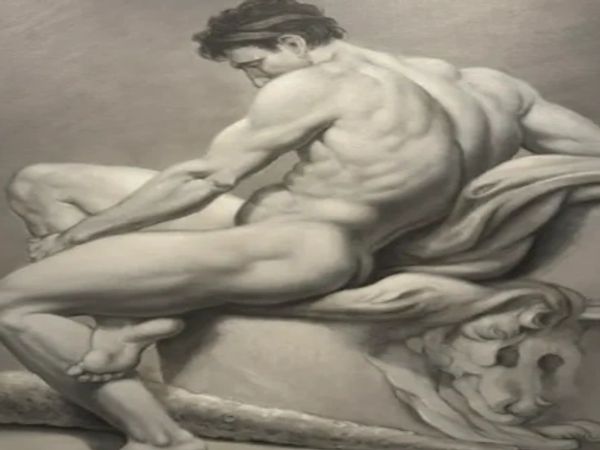
Philip Melville Courtney (b. 1962), American
2025 · Oil on canvas
Inspired by the celebrated Farnese Hercules, Courtney presents the heroic male body not in action, but in a moment of stillness and reflection. Painted en grisaille, the muscular figure is modeled through subtle tonal shifts that evoke the surface and monumentality of classical sculpture.
Balancing physical strength with vulnerability and repose, Hercules at Rest connects the classical ideal of the male form with contemporary figurative painting, transforming an iconic subject from antiquity into a quietly powerful modern study.
38 × 28 × 2 in.
From Classical Myth to Modern Masculinity
Dancing Faun
Dancing Faun
Dancing Faun
Fonderia Chiurazzi, Naples
Bronze · After the antique · 32 in.
The Dancing Faun transforms the classical male body into an image of ecstatic movement. With its twisting torso, raised arms and animated stance, the figure celebrates anatomy, rhythm and physical expression, offering a dynamic counterpoint to more restrained ideals of masculine beauty.
The sculpture is a Chiurazzi bronze after the celebrated ancient figure discovered at Pompeii.
The Thinker
Dancing Faun
Dancing Faun
After Auguste Rodin (1840–1917)
Renaissance Bronze Company · Nelson Rockefeller Collection · 1979
Edition 15/150 · Bronze · 28 in.
In The Thinker, the muscular male body becomes an expression of intellect and introspection. The compressed seated pose combines extraordinary physical power with stillness, demonstrating how Rodin transformed the traditional male nude from an ideal of heroic action into an image of psychological depth.
Torso of the Belvedere
Torso of the Belvedere
Torso of the Belvedere
After the antique
Plaster cast
One of the most influential representations of the male body in Western art, the Belvedere Torso distills the figure to anatomy, tension and sculptural form. The fragmentary body twists powerfully across the seated pose, its highly articulated musculature demonstrating why the ancient model became an essential object of study for generations of artists.
The celebrated original in the Vatican Museums is associated with Apollonios of Athens and profoundly influenced Renaissance and academic approaches to the heroic male nude, including Michelangelo.
Bird Man with Eagle
Torso of the Belvedere
Torso of the Belvedere
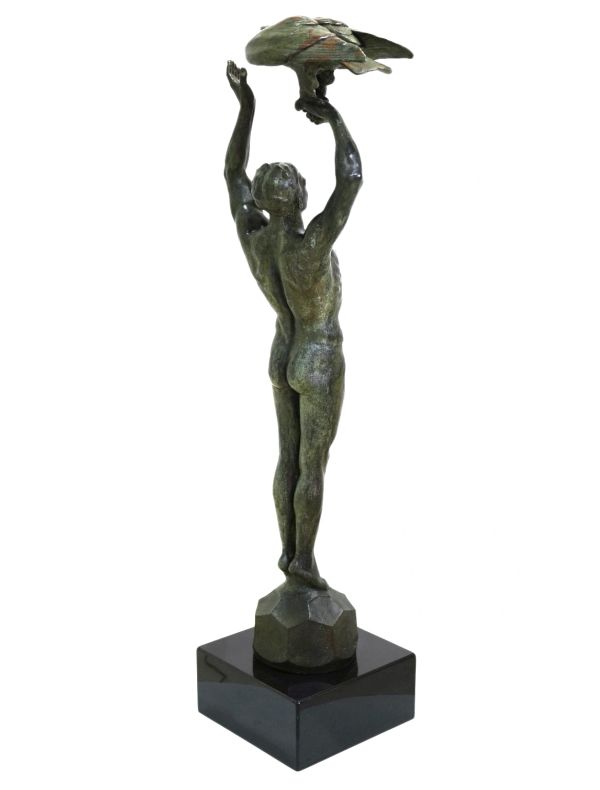
Otto Poertzel
Bronze · 1925
Previously sold by Maison Palm Beach
Poertzel elongates the male figure into a dramatic vertical composition, capturing the moment a youthful man raises an eagle overhead. The upward gesture turns the body into an expression of movement, aspiration and modern heroic masculinity, bringing a distinctly twentieth-century interpretation to the figurative tradition.
Previously sold by Maison Palm Beach.
Monumental Strength & Repose
The Wrestlers

After the Antique
Full-scale plaster cast
Two intertwined male bodies create an extraordinary study of anatomy, strength and physical movement. Based on the celebrated ancient composition of wrestlers locked in combat, the work captures the male form at its most dynamic, with twisting torsos and opposing limbs creating a powerful sense of tension and balance.
Monumental Scale 45 × 38 × 26 in.
Seated Mercury

Italian School, possibly Naples
Late 19th century · Life-size bronze
Seated Mercury presents the idealized male body in a moment of rest and poised alertness. Derived from the celebrated ancient sculpture discovered at Herculaneum, the youthful god sits relaxed upon a rocky outcrop, his graceful anatomy offering a striking contrast to the muscular struggle of The Wrestlers.
Lifesize 48 × 28 × 42 in.
Find a Work for Your Collection or Interior
Find a Work for Your Collection or Interior
Interested in a particular work or exploring the male figure in art?
Contact Maison Palm Beach for current availability, dimensions, documentation, and guidance on placement. You may also share a photograph of your room for a confidential recommendation.
